technologyNews
Startup Trump Family Ties Humanoid Robots Ukraine War
Indian Express•
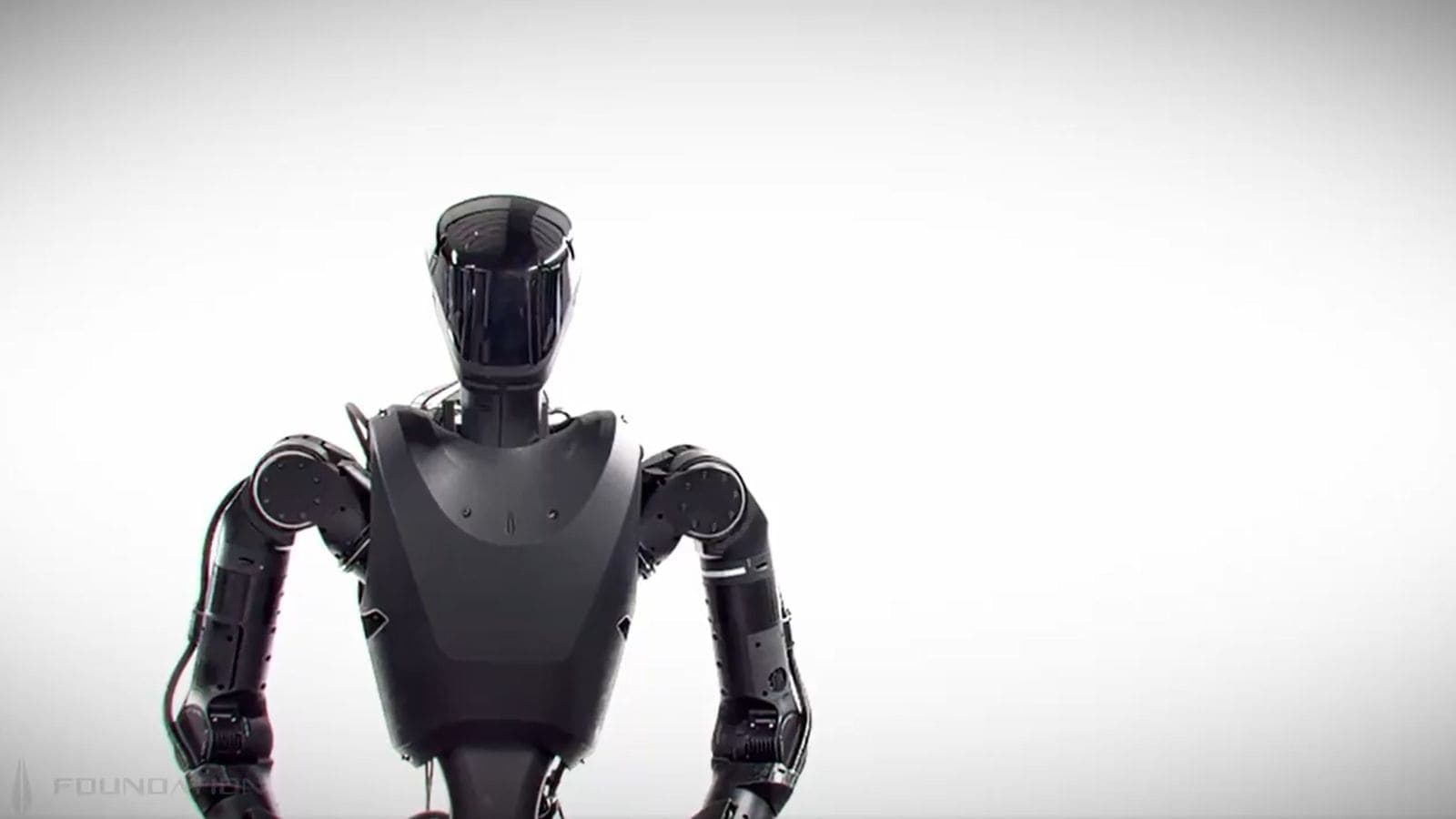
Amid the growing use of AI and robotics in modern warfare, a new tech startup is looking to develop and deploy dual-use autonomous humanoid robots for military applications as well as heavy industrial environments. Foundation Future Industries is a San Francis... Amid the growing use of AI and robotics in modern warfare, a new tech startup is looking to develop and deploy ‘dual-use’ autonomous humanoid robots for military applications as well as heavy industrial environments. Foundation Future Industries is a San Francisco-based robotics company with close ties to the family of US President Donald Trump. It is in the middle of conducting tests in Ukraine for the potential use of its humanoid robots in the country’s war against Russia. Earlier this year, the company sent two of its Phantom MK-1 units to Ukraine for a pilot demonstration. The ongoing tests are backed by the US government and conducted with Ukrainian officials. Currently, they are focused on testing whether Foundation’s robots can handle logistics in hazardous areas, according to a report by CNBC. Since the start of the Russia-Ukraine war five years ago, the ongoing conflict has emerged as a major test bed for robotics and AI in combat. The war has already seen the use of robots to deliver supplies to the front line, autonomous and AI-augmented drones for precision strikes and reconnaissance, etc. Origins of Foundation Future Foundation Future Industries was founded by Sankaet Pathak, Arjun Sethi, and Mike LeBlanc in 2024. Previously, Pathak led a fintech platform called Synapse that declared bankruptcy that same year. Sethi, on the other hand, is former CEO of VC firm Tribe Capital while LeBlanc is the co-founder of Cobalt Robotics, an AI-driven security automation company. Eric Trump, the son of US President Trump, was an investor in the firm before stepping in as an adviser. While several Silicon Valley companies are racing to build humanoid robots that can do routine chores such as fold laundry or make a latte, Foundation Future is looking to set itself apart in the increasingly crowded humanoid robotics industry by focusing on potential military use cases for its technology. Also Read | This tiny humanoid robot is designed to go wherever you go The company's core mission is the belief that humanoid robotics should be put towards humanity’s greatest challenges rather than household chores and service roles, as per CEO Sankaet Pathak. “I’m convinced the technology is reaching a level where it can replace jobs that are dangerous for humans to perform, and if you can do that, it’s the highest net good you can create out of all applications of robotics,” Pathak was quoted as saying by CNBC. What's next? Based on its testing of the MK-1 units in Ukraine, Pathak said the demonstration has proved that robots have the potential to perform supply pickups and other tasks where human soldiers would ordinarily be exposed to danger in conflict regions. Pathak further said that the company plans to scale production of its humanoid robots to thousands
ios_share
Share this article
Article Details
Indian Expresstechnology