nationalCollection
Long Walk For Water How Scarcity Is Breaking Womens Bodies In Maharashtras Tribal Belt
Indian Express•
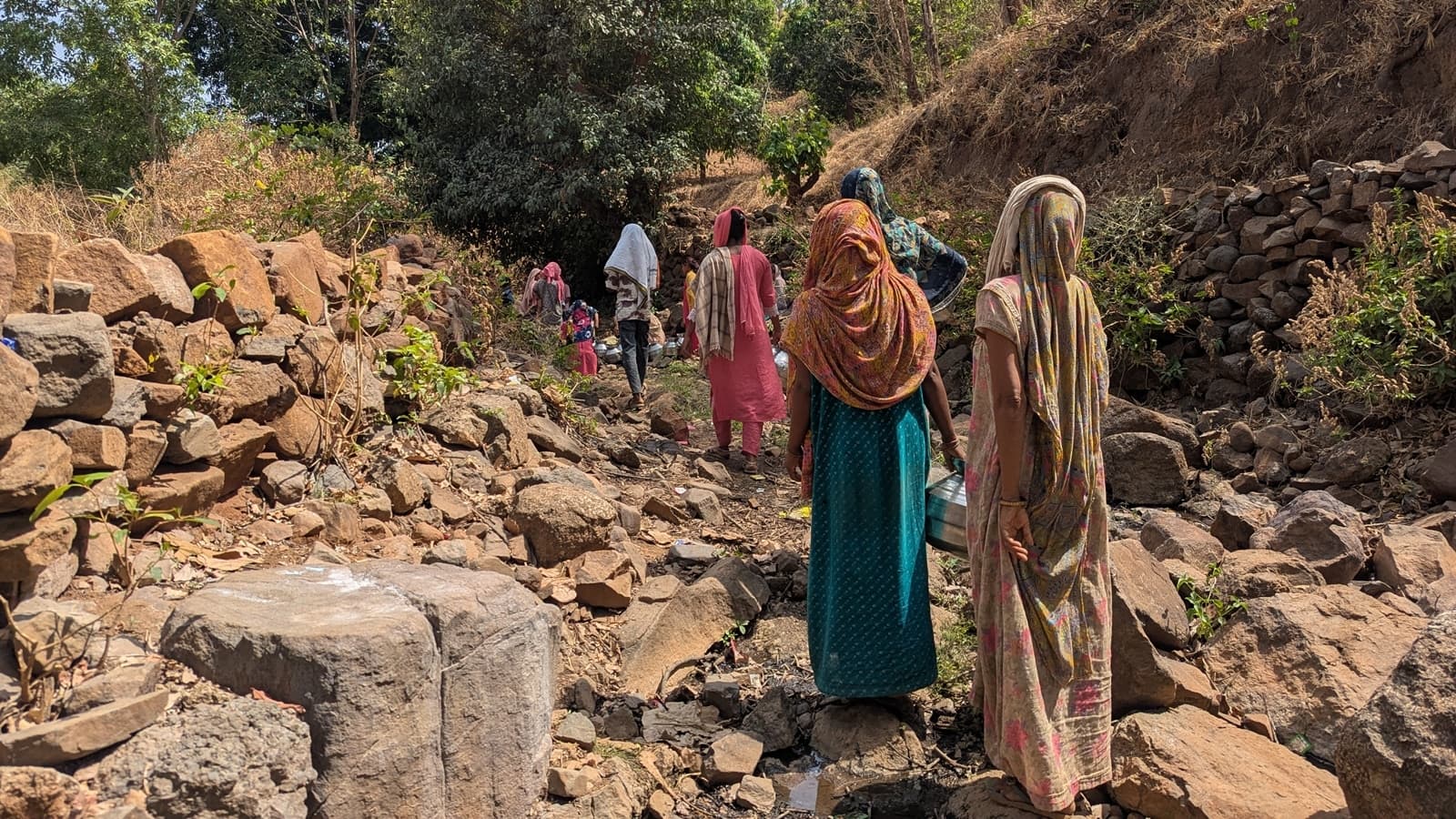
The women of Vadvi Pada begin their daily search for water at the hottest hour of the day. At 3 pm, under the harsh summer sun, around 30 women and girls from the tribal hamlet in Maharashtra's Nandurbar district start their descent down a rocky hillside carry... The women of Vadvi Pada begin their daily search for water at the hottest hour of the day. At 3 pm, under the harsh summer sun, around 30 women and girls from the tribal hamlet in Maharashtra's Nandurbar district start their descent down a rocky hillside carrying empty steel pots. The nearest water source is nearly 3 km away. Hours later, they climb back up balancing 7-10 kg of water on their heads. At the bottom of the hill lies a shallow natural pit. After four or five pots are filled, the water runs out, forcing women to wait nearly an hour for it to seep back into the ground. Nearby stagnant pools are also used by cattle. For generations, women across the tribal villages scattered through the Satpura ranges have spent much of their lives fetching water from distant streams, pits and wells. Now, doctors and health workers warn that this burden is taking a severe toll on their bodies. Read | Maharashtra will have to focus on water recharge with a missionary zeal to tackle drought: Rajendra Singh Women interviewed across more than 20 remote hamlets in Akkalkuwa and Dhadgaon talukas described chronic pelvic pain, uterine prolapse, recurrent vaginal infections, miscarriages, kidney stones and debilitating back pain conditions they believe are linked to years of carrying heavy loads of water from childhood. Ramabhauji Vadvi (59) holds an 18 mm kidney stone between his fingers in Chimapada village of Maharashtra’s Nandurbar district that he stores in a matchbox to show it to government officials someday. (Express photo by Purnima Sah) Forty-year-old Bajubai Dhoma Vadvi of Khadkapani village says she has spent nearly her entire life carrying water. "As I grew older, the size of the pots increased too. By the time I was 12, I was carrying the same load as my mother," she says. Lying on a mat inside her thatched hut while her daughter-in-law Mamta Vadvi massages hot oil onto her abdomen and legs, Bajubai recounts years of pain. Mamta, 27, herself suffers from chronic abdominal pain, recurrent vaginal infections and severe backache. "She cannot fetch water anymore because she cannot stand for long. Her uterus keeps slipping down," she says of Bajubai. Married at 13, Bajubai became pregnant soon after. "During my first pregnancy, I suffered a miscarriage while still carrying water in the ninth month. There was no choice. If women do not fetch water, the family has no water," she says. After fetching water, Mamta Vadvi (27) gives water to her three-year-old daughter Devika to drink. (Express photo by Purnima Sah) She continued carrying water through subsequent pregnancies despite worsening symptoms. "I constantly felt heaviness and pressure in my lower abdomen. During my last pregnancies, my uterus
ios_share
Share this article
Article Details
Indian Expressnational