nationalReview
Roberto Baggio The 1994 Legend No Missed Penalty Could Erase
Indian Express•
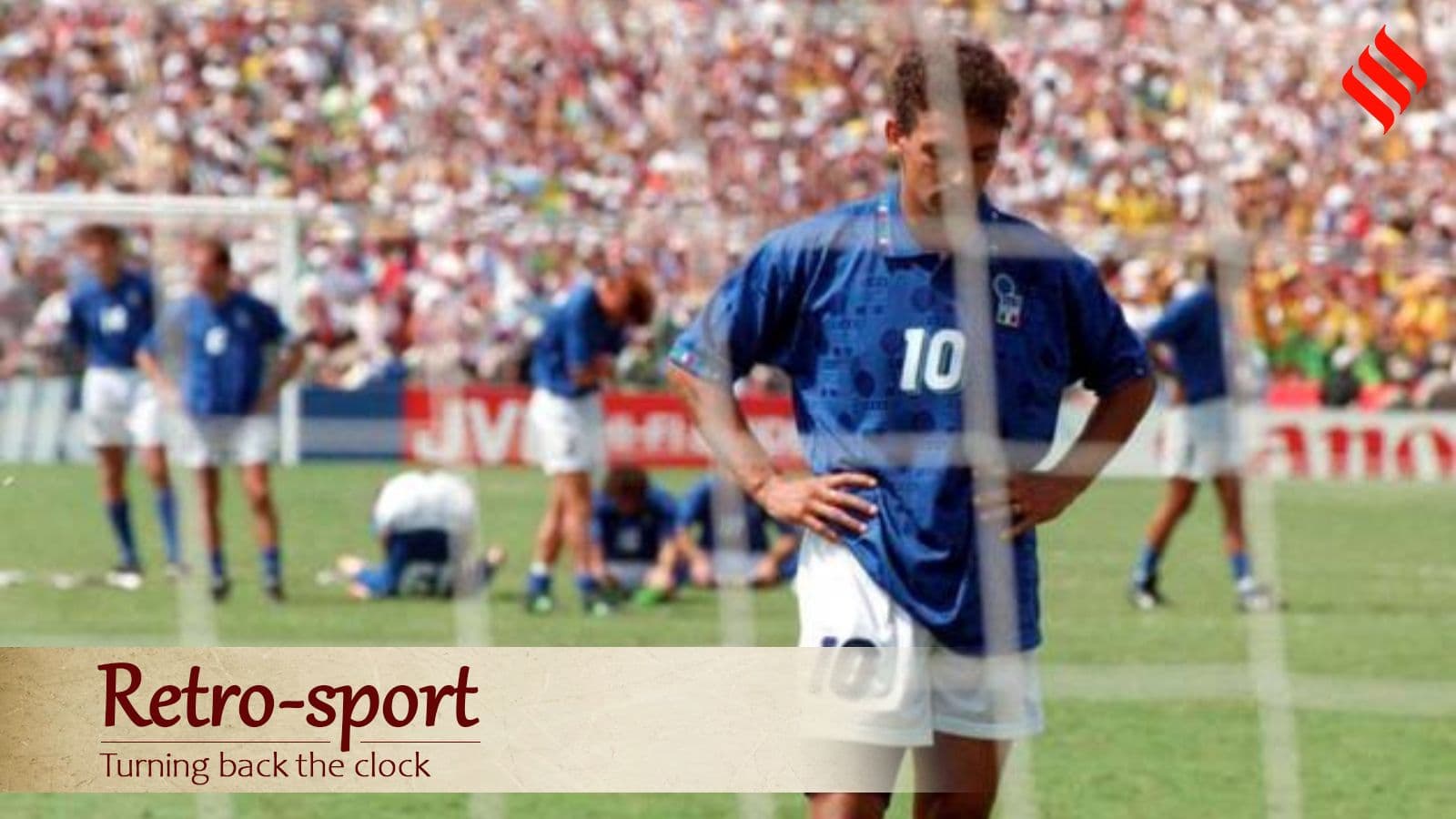
Madonna, sporting her own scrunched power-high ponytail and a No 15 Italy jersey, had already made her call on Roberto Baggio. On her Blonde Ambition Tour in Rome, just two days after the 1990 World Cup, she had spoken proper football: That goal against Czecho... Madonna, sporting her own scrunched power-high ponytail and a No 15 Italy jersey, had already made her call on Roberto Baggio. On her Blonde Ambition Tour in Rome, just two days after the 1990 World Cup, she had spoken proper football: “That goal against Czechoslovakia was marvellous.” Football snobs scoffed when she added, “I didn’t know his name then, but that goal and his big green eyes conquered me.” By 1994, she had anointed him the “Cutest.” The rest of the world was catching up. The footballing flock called him the Divine Ponytail – Il Divin Codino – after he embraced Nichiren Buddhism in 1985 following a career-threatening knee injury in Campania so severe he was told he might not walk normally again. The faith he found in recovery was not incidental – it became the stillness you could see in him under pressure, the composure that looked almost unreasonable given the moments he was asked to produce it in. Unlike 2026, Norway had pestered the Azzurri plenty in the group stage, but it was the non-related Dino Baggio – no connection beyond the surname – who scored Italy’s only group win. By the knockouts, coach Arrigo Sacchi was being hectored to bench Roberto. He had struggled to score. Italy had scraped through. What followed over the next three matches became something else entirely. It started against Nigeria in the Round of 16. Italy trailing 1-0, 88th minute, tournament effectively over, Sacchi’s selections being loudly questioned, one man left to answer. Roberto Mussi, the versatile defender who could swap full back for centre back, turned to play the ball back, and Baggio used the inner foot – the calcaneus, cuboid and metatarsal working together – to rifle an equaliser into the side netting. He then converted the overtime penalty to send Italy through. Four of his five goals at that tournament were angular strikes aimed at the side meshing – geometrically the most efficient way to beat a goalkeeper with the inner foot. The precision was a pattern, not an accident. In the quarter-final, Spain dominated the second half. Spanish striker Julio Salinas had a one-on-one and missed. “We controlled the game,” he would say afterwards. “But Italy got only the one play.” Dino Baggio floated a pass over midfield, Giuseppe Signori picked it up and redirected it a moment before being tackled, and Roberto moved with sudden sharpness to get onside. Zubizarreta, considered among Europe’s best goalkeepers, came out to close the angle. Baggio drifted past him as if the decision had already been made, and found the corner. Italy were in the semi-finals. “We started this tournament suffering,” Signori said. “I think we will suffer until the very end.” At Giants Stadium in
ios_share
Share this article
Article Details
Indian Expressnational