defenseCollection
Drdo Successfully Tests Rudram Ii Anti Radiation Missile Iaf Su 30 Mki
Indian Express•
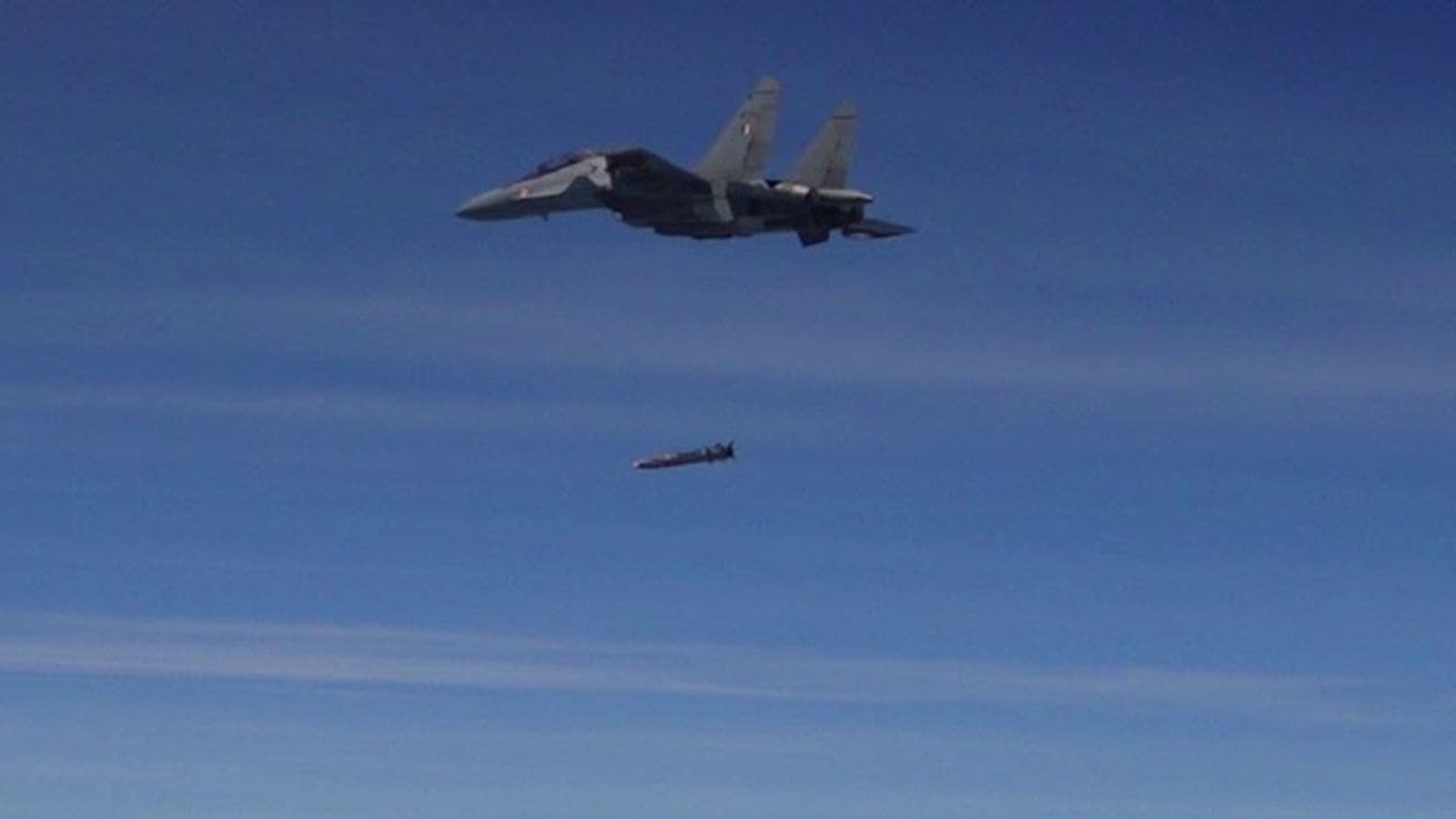
The Defence Research and Development Organisation (DRDO) has conducted yet another successful test of the anti-radiation air-to-surface missile RudraM II. Indigenously designed to neutralise enemy radar and communication assets, the missile was tested with the... The Defence Research and Development Organisation (DRDO) has conducted yet another successful test of the anti-radiation air-to-surface missile RudraM II. Indigenously designed to neutralise enemy radar and communication assets, the missile was tested with the Indian Air Force (IAF) from a fighter jet. The Ministry of Defence said that tests were conducted under extreme release conditions with critical trajectory establishing the capability of all subsystems. While the MoD did not specify which IAF platform the missile was fired from, the image shared by the MoD suggested that it was tested from the frontline fighter jet Su-30 MKI. Anti Radiation Missiles (ARMs) are designed to detect, track and neutralise the radar, communication assets and other radio frequency sources belonging to the adversary, which are generally part of their Air Defence Systems. “The missiles after release were guided to a predefined target with pin-point accuracy. All the test objectives were fully met as confirmed by the flight data captured by various range instruments deployed by Integrated Test Range (ITR), Chandipur.” the MoD release added. Till now, three variants of RudraM — I, II and III have been developed and comprehensive testing of the first and second variant has been done in the past. RudraM-II has been indigenously developed by Research Centre Imarat, Hyderabad as the nodal DRDO laboratory in collaboration with other sister labs such as Defence Research and Development Laboratory, Hyderabad, two Pune based facilities — High Energy Materials Research Laboratory and Armament Research and Development Establishment — and Integrated test Range (ITR). Along with the Development cum Production Partners (DcPPs), agencies like Hindustan Aeronautics Limited, Regional Centre for Military Airworthiness, Missile System Quality Assurance Agency and many other industries have contributed to the project, MoD said. The RudraM missile has been developed for IAF’s requirement to enhance its Suppression of Enemy Air Defence (SEAD) capability. As one of the many aspects of the SEAD tactics, the Anti radiation missiles are used mainly in the initial part of the air conflict to strike at the air defence assets of the enemy from stand-off ranges and also in later parts, giving higher survivability in the subsequent strikes by own aircraft. MoD release said, “Defence Minister Rajnath Singh has lauded the effort of all stakeholder agencies and the industry for the successful flight-tests.” RudraM-II missile designed to neutralise enemy radars and communication assets, tested successfully. Sushant Kulkarni is a Special Correspondent with The Indian Express in Pune with 12+ years of experience covering issues related to Crime, Defence, Internal Security and Courts. He has been associated with the Indian Express since July 2010. Sushant has extensively reported on law and order issues of Pune and surrounding area, Cyber crime, narcotics trade and terrorism. His coverage in the Defence beat includes operational aspects of the three services, the defence
ios_share
Share this article
Article Details
Indian Expressdefense