businessCollection
Ranveer Adityas Risky Dhurandhar Deal Turns Golden
Great Andhra•
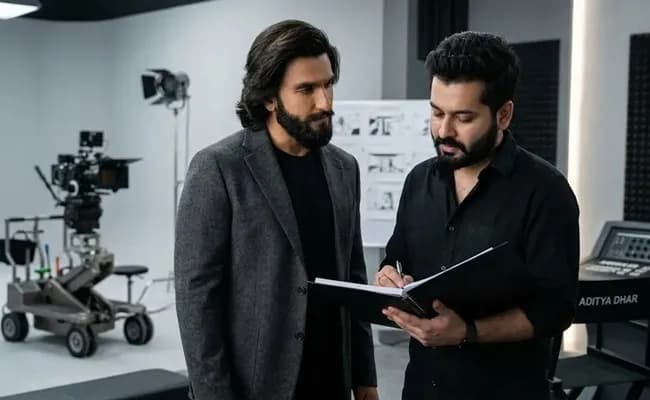
Ranveer Singh s Dhurandhar franchise has turned into a box-office monster. The two films, Dhurandhar and Dhurandhar: Revenge, have together collected more than Rs 3,000 crore Ranveer Singh s Dhurandhar franchise has turned into a box-office monster. Ranveer Singh’s “Dhurandhar” franchise has turned into a box-office monster. The two films, “Dhurandhar” and “Dhurandhar: Revenge,” have together collected more than Rs 3,000 crore… The two films, “Dhurandhar” and “Dhurandhar: Revenge,” have together collected more than Rs 3,000 crore worldwide, rewriting records and turning the franchise into one of Indian cinema’s biggest success stories. But producer Jyoti Deshpande says the journey was anything but smooth. Speaking to ET Digital, she revealed that the film battled rising budgets, a major mid-production rethink and a risky financial model involving Ranveer Singh and director Aditya Dhar. Instead of demanding huge upfront fees, both Ranveer Singh and Aditya Dhar reportedly agreed to smaller fixed payments and backend profit-sharing deals. This meant they would earn more only if the film succeeded. “In Dhurandhar, Ranveer came with a smaller fixed fee and a backend deal, and therefore benefited from that arrangement. The same was true for Aditya,” Deshpande said. According to her, this helped share both the risk and the reward among the key people involved in the project. Deshpande admitted that the film’s budget went far beyond initial estimates. “On Dhurandhar, we went all in. The film ended up being made for almost double the amount we had initially set out to spend,” she said. What began as one film eventually turned into a two-part saga. Though the decision involved huge risk, the final result made it worth it. “In the end, all of us went laughing to the bank,” she added. Interestingly, “Dhurandhar” was not originally planned as a franchise. Deshpande said the film was written, planned and budgeted as a single movie. But after the first shooting schedule, the team realised that the scale had already grown beyond expectations. The footage from the first schedule reportedly impressed the makers so much that they felt the story had enough strength to become a two-part film. The decision was not easy, as the team had to commit more money before the project became a guaranteed winner. Deshpande said the script immediately caught her attention because it was very different from regular commercial films. The story was initially set entirely in Pakistan and dealt with the idea of the “deep state,” a subject rarely explored in mainstream Indian cinema. She said the concept was both real and abstract, making it challenging but exciting to explain to a mass audience. Another major attraction was the film’s chapter-based narrative style. Deshpande said audiences today are used to OTT-style storytelling, where they spend more time with characters and worlds. That format inspired the makers to create something more immersive than a simple beginning-middle-end film. The team also saw long-term franchise potential in “Dhurandhar,” similar to global brands like “Bond” and “Mission: Impossible.” Though “Dhurandhar” may look like a gangster-action film on
ios_share
Share this article
Article Details
Great Andhrabusiness