technologyReview
How Indias Engagement With Europe Is Becoming More Strategic Diversified
Indian Express•
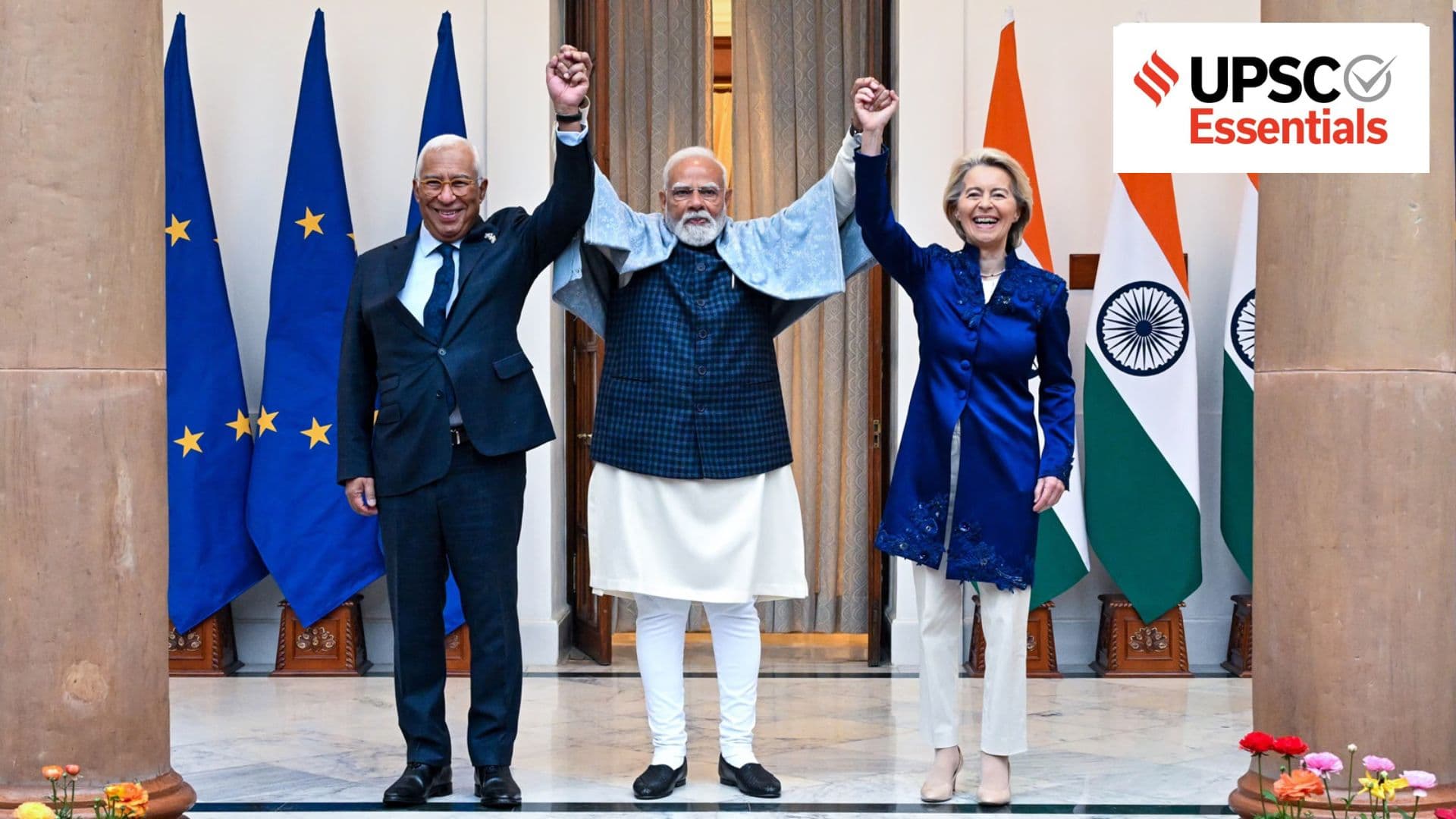
India's engagement with Europe is becoming more strategic, diversified, technology-oriented, and institutionally grounded. Prime Minister Narendra Modi s recent visit to four European countries - the Netherlands, Sweden, Norway, and Italy - underscores the gro... India's engagement with Europe is becoming more strategic, diversified, technology-oriented, and institutionally grounded. Prime Minister Narendra Modi’s recent visit to four European countries - the Netherlands, Sweden, Norway, and Italy - underscores the growing momentum in India’s engagement with Europe. Over the past few years, Europe has emerged as a key partner for India in areas such as trade, investment, technology, and the green transition. The growing convergence of interests between India and Europe was evident at the 16th India–EU Summit in New Delhi, where the two sides declared the successful conclusion of trade negotiations and adopted Towards 2030: A Joint Comprehensive Strategic Agenda. Prime Minister Modi’s visit further reinforced this trajectory, with a strong emphasis on green growth, technological collaboration, and defence industry cooperation. Four major developments stand out as the most significant outcomes of the visit - upgrading partnerships, technology diplomacy, green growth, and defence and security cooperation. Expanding and upgrading European partnerships A clear strategy is emerging in the way New Delhi now engages with Europe. This reflects a deeper understanding of how the European Union (EU) functions and how competencies are divided between the EU and its member states. It also demonstrates a growing appreciation of the close economic and strategic linkages between EU member states and other non-EU European countries. India and the EU have been strategic partners since 2004. Similarly, India has established strategic partnerships with major European powers, including France (1998), Germany (2000), and the United Kingdom (2004). More recently, India signed strategic partnerships with Italy and Greece in 2023, followed by Poland in 2024. Following Brexit, India upgraded its relationship with the United Kingdom to a Comprehensive Strategic Partnership in 2021. Likewise, the India–France partnership was elevated to a Global Strategic Partnership in 2026. Recently, New Delhi has signed one more strategic partnership with Cyprus. During Prime Minister Modi’s recent visit, India signed two new strategic partnerships with the Netherlands and Sweden, while its relationship with Italy was elevated to a Special Strategic Partnership. Technology diplomacy The visit was a clear manifestation of India’s growing emphasis on technology diplomacy. Operating at the intersection of foreign policy, economics, technology, and security, technology diplomacy seeks to address issues such as artificial intelligence (AI), digital governance, semiconductors, quantum computing, telecommunications, critical technologies, and cybersecurity through international cooperation and partnerships. In an era where technological dependence is increasingly viewed through the lens of strategic vulnerability, both India and Europe are seeking trusted partners to advance their ambitions in emerging technologies. At present, both lag behind the United States and China in several breakthrough digital technologies. Nevertheless, European and Indian companies possess significant strengths in niche technological domains and considerable potential for innovation-led growth. Policymakers on both sides have therefore been working to combine Europe’s technological capabilities with India’s scale, talent pool,
ios_share
Share this article
Article Details
Indian Expresstechnology