technologyCollection
H 1b Visa Over 2 Lakh Applicants Paid 100000 Fee
Great Andhra•
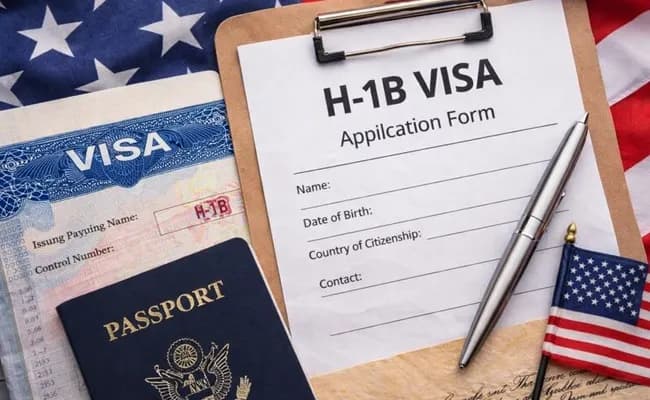
More than two lakh H-1B visa applicants have reportedly paid a massive $100,000 fee for faster processing to enter the United States, according to U.S. More than two lakh H-1B visa applicants have reportedly paid a massive $100,000 fee for faster processing to... More than two lakh H-1B visa applicants have reportedly paid a massive $100,000 fee for faster processing to enter the United States, according to U.S.… More than two lakh H-1B visa applicants have reportedly paid a massive $100,000 fee for faster processing to enter the United States, according to U.S. Department of Homeland Security Secretary Markwayne Mullin. Testifying before a Senate panel, Mullin said the DHS had received around 286,000 H-1B visa applications so far in fiscal year 2026. Of them, more than 200,000 applicants had opted to pay the $100,000 fee to get their applications processed faster. According to Mullin, applications under this route are processed in about 15 days, while regular applications currently take nearly seven and a half months. The disclosure has triggered a major debate in the U.S., especially over the impact of the steep fee on employers, foreign workers and essential sectors such as healthcare and education. The issue came up during a discussion on workforce shortages in rural America. Senator Susan Collins raised the example of a hospital in Presque Isle, a rural community in northern Maine, which had to pay the fee to recruit a surgeon from overseas. Collins argued that rural healthcare providers cannot be treated in the same way as large technology companies hiring foreign workers in sectors where domestic talent is more easily available. She asked whether the administration would consider an exemption for medical professionals when a community is unable to find a qualified doctor locally. Responding to her concern, Mullin said he would examine whether more flexibility could be given in such cases. He indicated that applications linked to critical workforce shortages could be considered differently on a case-by-case basis. Collins said there was a major difference between bringing in a computer expert to work in Silicon Valley and bringing in a badly needed surgeon to serve a rural hospital. The discussion also expanded to the education sector. Senator Lisa Murkowski of Alaska raised concerns about teacher shortages in rural school districts and said she would follow up with DHS on H-1B visas for teachers. The $100,000 fee has now become a major talking point in the debate over America’s skilled worker visa system. Ad: Pickles made to order- Free shipping on 3 kg While the government says it helps speed up processing, critics argue that such a high fee could make it difficult for smaller employers, hospitals, schools and rural institutions to hire foreign professionals. For Indian professionals, who form a major share of H-1B visa holders, the development is significant. The fee could make the visa process more expensive and may force companies to be more selective in sponsoring foreign workers. At the same time, the demand for faster processing shows that employers
ios_share
Share this article
Article Details
Great Andhratechnology