technologyOtt
Ilaiyaraaja Copyright Dispute Royalties Spb Coolie Manjummel Boys Biopic
Indian Express•
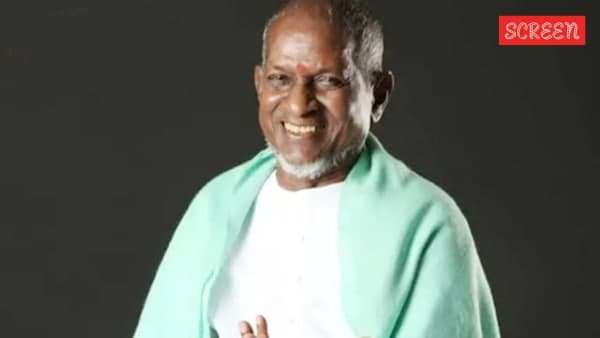
Over a career spanning nearly five decades, Ilaiyaraaja has composed music for over 1,500 films and written more than 8,000 songs. By any reasonable measure, that catalogue is one of the most commercially exploited bodies of work in Indian cinema. Over a career spanning nearly five decades, Ilaiyaraaja has composed music for over 1,500 films and written more than 8,000 songs. By any reasonable measure, that catalogue is one of the most commercially exploited bodies of work in Indian cinema. It has played in theatres, on radio, on television, at live concerts across the world, and more recently across every streaming platform imaginable. For much of that time, the money it generated flowed primarily to producers, music labels, and event organisers. The composer himself saw very little of it. What makes Ilaiyaraaja different from every other musician this happened to is simple: he refuses to accept it Born Gnanathesigan on June 3, 1943, in Tamil Nadu, Ilaiyaraaja debuted as a film composer with Annakili in 1976. What followed was one of the most prolific runs in the history of Indian film music. He won five National Film Awards, three for Best Music Direction and two for Best Background Score, and received both the Padma Bhushan and the Padma Vibhushan. His admirers call him “Isaignani,” meaning the musical sage. The Royal Philharmonic Orchestra in London went further, conferring on him the title “maestro” after he became, in June 1993, the first Asian to have his symphonic work performed with the orchestra. The accolades were significant, however, royalties were not. The problem the composer faced was entirely structural. Audio companies were holding rights and exploiting legal loopholes without paying royalties. The IPRS, which was meant to govern this, was paying composers and lyricists very little. When the digital revolution arrived, it became even more tangled, with some companies selling music on digital platforms without prior permission from the people who actually created it. Also Read: Aamir Khan to marry for the third time, will tie the knot with Gauri Spratt on July 5 After facing this, Ilaiyaraaja decided to fight back in court. In September 2014, a single judge of the Madras High Court restrained music labels from exploiting his music, with the restraint made absolute from March 2015. During this period, Ilaiyaraaja also moved the court for contempt against the labels, alleging they continued to exploit his works in violation of the court’s order. One of the key disputes involved Agi Music, which had claimed rights over his compositions for ten years. Ilaiyaraaja contested this, arguing that under prevailing provisions, agreements with no specified period stood valid for only five years. He submitted records showing the firm owed him Rs 3.37 crore in royalties between 2007 and 2014. He also put broadcasters on notice, stating publicly that any agreements he had signed earlier were valid for only five years, and that unless properly renewed, they could not continue using his work. What flipped the entire conversation was in 2017, when came
ios_share
Share this article
Article Details
Indian Expresstechnology