politicsNews
Cockroach Janta Party Swatted Away Parties Gen Z Discontent
Indian Express•
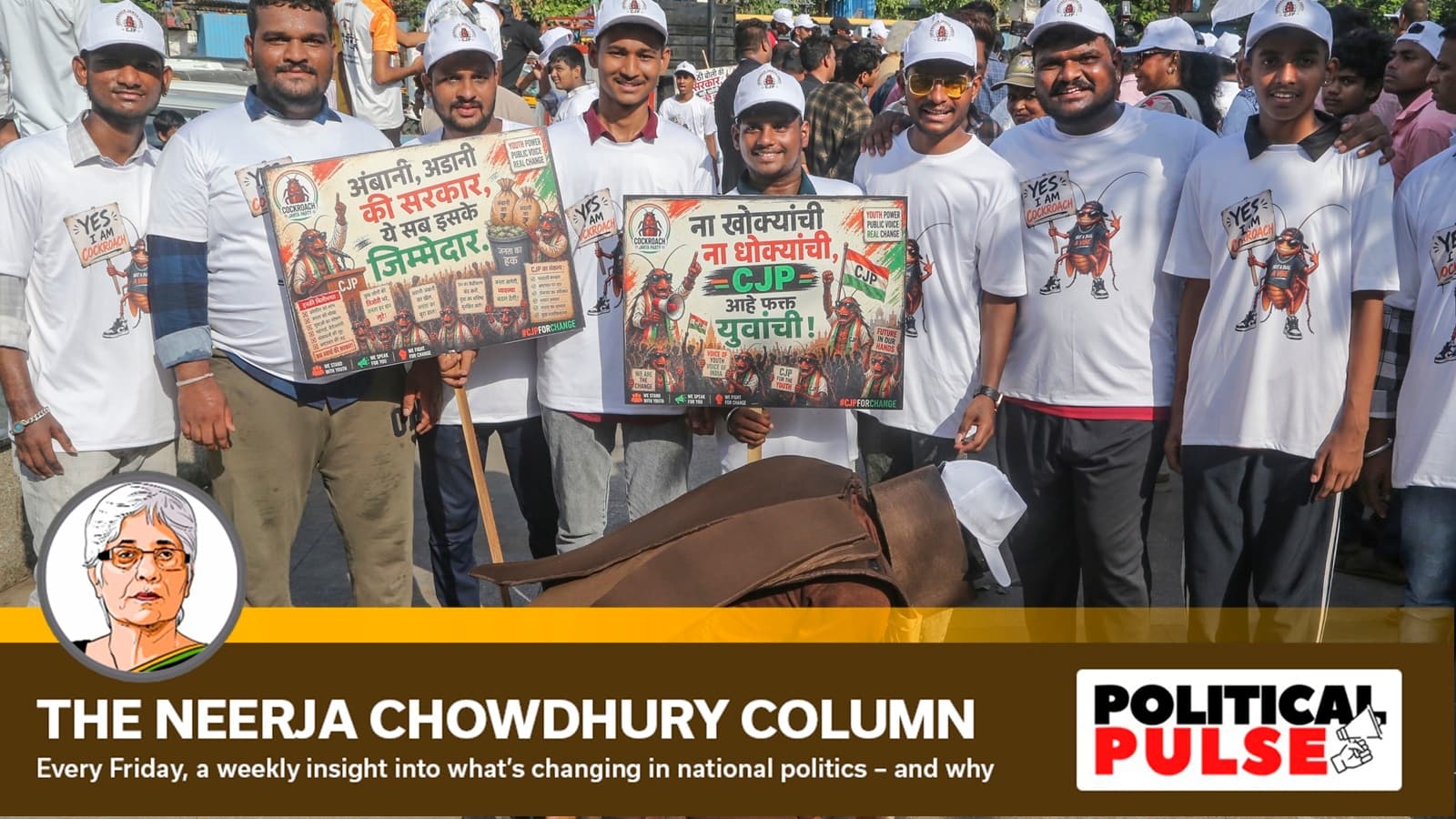
When an indignant Dilliwalla, whose family was associated with the freedom struggle, told me he would never vote for an outfit that called itself Cockroach Janta Party (CJP), he was summing up the dilemma of an older India compelled to adjust to a rapidly chan... When an indignant Dilliwalla, whose family was associated with the freedom struggle, told me he would never vote for an outfit that called itself Cockroach Janta Party (CJP), he was summing up the dilemma of an older India compelled to adjust to a rapidly changing younger India, with all that it brought in its wake. Here was a thinking individual who followed politics, a successful entrepreneur who had just crossed 60, inclined against the BJP for the very reasons outlined in the CJP’s “manifesto” but unwilling to support it. In a week, the CJP became a sensation with over 20 million followers on Instagram, overtaking the following the BJP and the Congress had built over several years. This made even the international media sit up and take note. This could be just another social media flash in the political pan, but it’s worth reflecting on why it struck a chord. Just earlier this month, actor C Joseph Vijay came to power in Tamil Nadu, sweeping aside an entrenched party like the DMK, with the Opposition AIADMK also failing to emerge as the alternative. All thanks to Gen Z and an even younger Gen Alpha, 12 to 16-year-olds who influenced the voting choice of adults in their home. “My teenage granddaughter compelled my wife to vote for Vijay,“ said the editor of a daily in Tamil Nadu. “And in home after home in Tamil Nadu, children prevailed on their parents and grandparents to vote for Vijay and remember, many of them will be first-time voters five years down the line.” Elections are increasingly being influenced, in small or big measure, by social media. That is why a rapper, Balendra Shah, is Nepal’s Prime Minister today. That is also one reason why Sheikh Hasina, whose father Sheikh Mujibur Rahman created Bangladesh, was ousted from power and is in exile in India. India is a large and diverse country and it is not easy to pull off a Nepal or a Bangladesh here. But it will be a mistake to dismiss the CJP as a foreign conspiracy. This is not to say that the government of the day should not be vigilant about the possibility of forces that may try to use or fuel such a phenomenon, particularly when the global reordering of power blocs is taking place. The CJP highlights dissatisfaction with the establishment, and this is also reflected in its manifesto and anthem. That it should come soon after the BJP’s impressive victory in West Bengal, unseating a leader such as Mamata Banerjee, is a reminder that the ruling party has to go beyond making madrasa students in the state sing Vande Mataram. More importantly, the online phenomenon highlights the failure of the Opposition parties to
ios_share
Share this article
Article Details
Indian Expresspolitics